Potting Compounds Explained: Choosing the Right Solution for Electronics Protection
Potting compounds are the backbone of reliable electronics protection, providing sealing, insulating, and stabilizing components so they survive harsh environments, heavy use, and long service lifecycles. Modern electronics face increasingly demanding environments, including moisture, chemicals, vibration, thermal cycling, and high voltages all threaten long‑term reliability. Potting compounds provide one of the most robust forms of electronics protection, fully encapsulating sensitive assemblies to create a durable barrier against environmental and electrical stress.
For OEMs, engineers, and product designers, selecting the right electronic potting compounds is essential. This guide explains what potting compounds are, how they work, the differences between epoxy, polyurethane, and silicone systems, and how to choose the best material for applications such as PCB encapsulation, sensors, transformers, power supplies, and industrial controls.
What Are Potting Compounds?
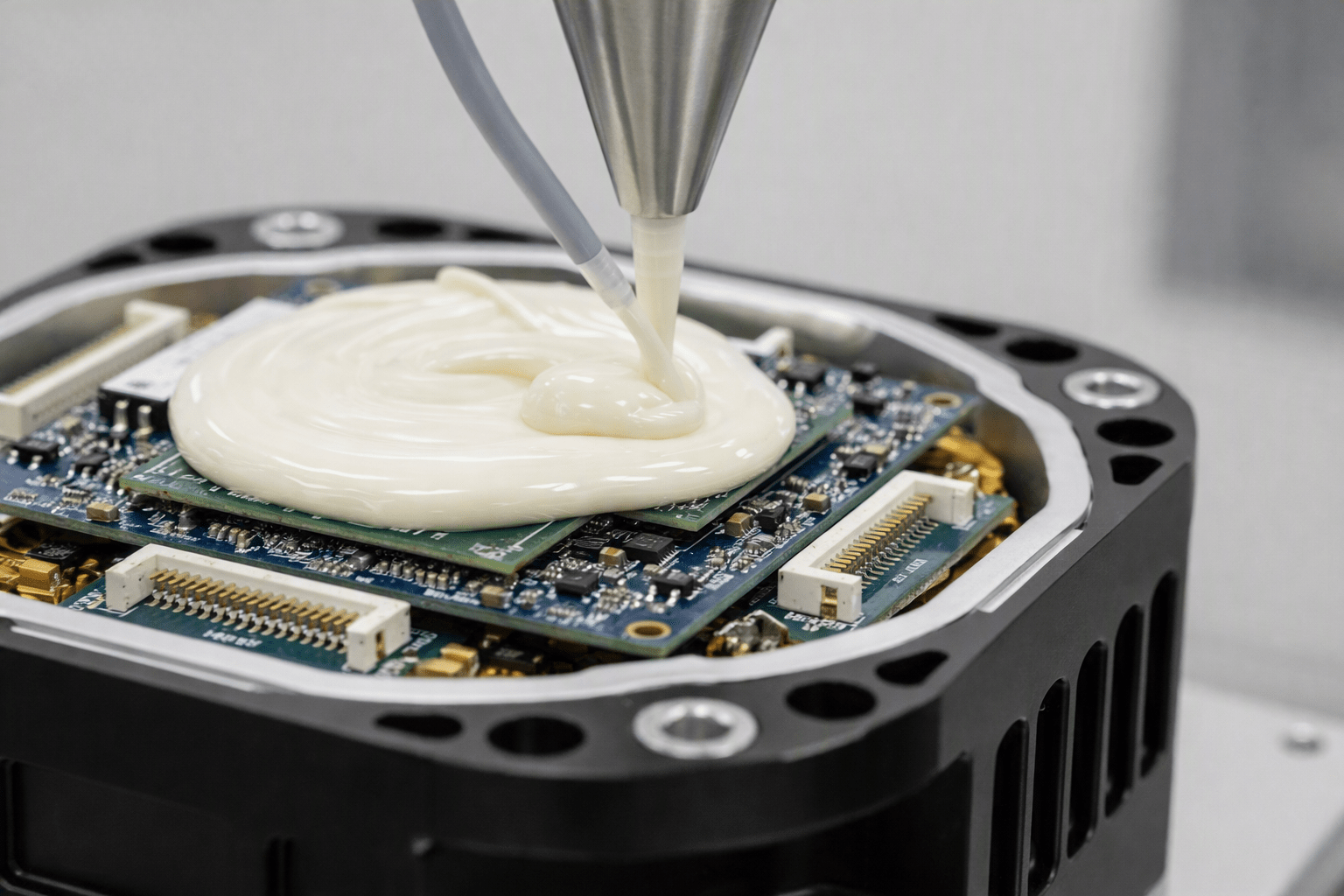
Potting compounds are liquid or paste-like materials poured over electronic assemblies, such as PCBs, coils, or sensor modules, where they cure into a solid or gel structure. Unlike thin conformal coatings, potting compounds fill the entire cavity, creating a uniform protective mass around components.
Once cured, potting compounds block moisture, condensation, and corrosive chemicals, absorb vibration and mechanical shock, improve dielectric strength and prevent electrical arcing, stabilize components during thermal cycling, and provide tamper resistance for security‑sensitive electronics. This makes potting ideal for electronics exposed to harsh environments, high voltages, or continuous mechanical stress.
How Potting Compounds Protect Electronics
Moisture & Chemical Resistance
Potting compounds seal electronics against water, oils, fuels, cleaning agents, and chemical slurries, all conditions where conformal coatings alone may fail.
Vibration & Mechanical Shock
By surrounding components with a cured resin, potting compounds reduce solder‑joint fatigue and protect tall or delicate components from vibration‑induced failure.
Thermal Cycling
Silicone and polyurethane systems maintain flexibility across wide temperature ranges, reducing stress during expansion and contraction. Epoxies provide structural stability but may introduce stress in extreme cycling environments.
Electrical Protection
Potting compounds maintain clearance distances, suppress arcing, and prevent electrochemical migration, which are critical for high‑voltage assemblies, power electronics, and industrial controls.
Comparing Epoxy, Polyurethane, and Silicone Potting Systems
Choosing the right chemistry depends on the operating environment, mechanical requirements, and serviceability needs.
Epoxy Potting Compounds
Epoxy systems are known for high mechanical strength, excellent chemical resistance, and strong adhesion. They are ideal for structural stability and tamper‑resistant designs. Anhydride cured epoxies also maintain low dielectric constants at highly elevated temperatures.
Epoxy Potting Compounds are best for:
- Industrial controls
- Transformers and power supplies
- Tamper‑resistant modules
- High‑voltage insulation
There are some factors to keep in mind when using epoxy potting compounds. They are rigid and may stress components during thermal cycling. They are also difficult to rework and can trap heat unless formulated for thermal conductivity.
Polyurethane Potting Compounds
Polyurethanes offer a balance of flexibility and durability, making them suitable for outdoor or moisture‑rich environments. They are not recommended for high voltage applications or when high airborne chlorides are found, i.e. near the seas.
Polyurethane Potting Compounds are best for:
- General electronics exposed to moisture
- Low voltage coils
- Abrasion‑prone environments
Some considerations for polyurethane potting compounds: they have only a moderate temperature resistance, rework is challenging, and they must match formulation to the application, such as abrasion, moisture and vibration.
Silicone Potting Compounds
Silicones remain flexible across extremely wide temperature ranges (−60 °C to +200 °C, with specialty grades up to +300 °C).
Silicone Potting Compounds are best for:
- Temperature‑cycling environments
- Sensitive sensors
- Vibration‑heavy assemblies
Traits to consider when using silicone potting compounds: they have lower structural rigidity, may shift over time in high-vibration applications, and have a higher material cost.
Key Selection Factors
Selecting the right potting compound requires evaluating the specific protection problem and the assembly’s geometry. At Broadview Technologies, we consider the following when making a recommendation.
1. Temperature Resistance
Continuous operating temperatures and cycling frequency
2. Dielectric Properties
High‑voltage assemblies benefit from anhydride cured epoxies with strong dielectric strength and arc‑resistance.
3. Flexibility & Mechanical Stress
Silicone and polyurethane reduce stress during vibration and thermal cycling. Epoxies can do this as well if the proper flexible curing agent is chosen.
4. Viscosity & Flow Behavior
Low‑viscosity and low vapor pressure materials are better for deep cavities or tight geometries; high‑viscosity compounds may require extended time vacuum degassing.
5. Cure Time & Processing
Consider production throughput, pot life and viscosity stability, and whether heat‑accelerated curing is acceptable and how much time is required.
6. Repairability
Epoxy is generally non‑repairable, polyurethane has limited rework, and silicone is the most serviceable.
Common Applications for Electronic Potting Compounds
Potting compounds are used across industries where reliability is non‑negotiable:
- PCB encapsulation for harsh‑environment electronics
- Sensors exposed to chemicals, moisture, or vibration
- Transformers and inductors requiring electrical insulation
- Power supplies and ignition coils needing thermal and dielectric stability
- Industrial controls operating in dusty, wet, or corrosive environments
- Automotive and aerospace modules facing extreme temperature cycling
Broadview Technologies: Your Partner in Epoxy Potting and Specialty Anhydrides
As a leader in advanced materials since 1970, Broadview Technologies supplies specialty anhydrides and epoxy curing solutions engineered for high‑performance epoxy potting systems. Our products support formulators and manufacturers who need:
- Reliable curing agents for high‑voltage insulation
- Enhanced thermal stability and dielectric performance
- Customizable potting formulations for demanding environments
- Proven chemistry for long‑term electronics protection
- Systems that can meet Class H requirements
- Low outgassing NASA approved formulations
Whether you’re developing next‑generation PCB assemblies, ruggedized sensors, or industrial power modules, Broadview delivers the expertise and materials to ensure your potting system performs under pressure.
Explore our full product portfolio at https://www.broadview-tech.com/ and contact us to find the right solution for your application.